An electric gripper price is set by five inputs: the force and stroke class the duty needs, how the drive and controller are packaged, how much feedback the unit returns, the protection rating the environment demands, and the volume and customisation the order carries. Two quotations that sit far apart are usually not the same class of product wearing the same family name. The electric gripper price is a configuration answer, not a catalogue fact.
Most frustrating comparisons come from pricing the wrong question. A buyer who asks for an electric gripper for a two kilogram part and a buyer who sends the full duty receive two documents that cannot be compared, and the lower figure is often lower only because less was specified. This note covers what moves the number, where buyers add cost without gaining anything, and how to make quotations comparable before discussing them at all.
On this page
Why the electric gripper price is a class, not a product
Electric grippers are sold as families but priced as classes. One catalogue line can hold a unit that moves a small moulded clip and a unit that carries a machined housing through a wrist rotation. That is why the electric gripper price is never one figure to look up, and why a number on a quotation belongs to a point inside the family rather than to the family itself.
When one supplier answers with a fraction of another’s figure, the usual explanation is not a different commercial posture. It is that the lower document priced a smaller class: less force margin, shorter travel, no position feedback, a lighter protection rating. Neither supplier could tell from a one-line request which duty was intended, so the first practical move is to restate the requirement in terms a supplier has to price from.
| What the requirement statement contains | What it moves inside the unit | Weight in the electric gripper price |
|---|---|---|
| Part mass and the force the contact must carry | Motor and transmission sizing | Decisive |
| Travel the part envelope needs | Guide length, rail size, body geometry | Decisive |
| Grip duration and duty cycle | Thermal path and holding strategy | Moderate |
| Feedback the process uses | Encoder, current sensing, interface electronics | Moderate |
| Environment: coolant, chips, dust, washdown | Seals, glands, materials, finish | Moderate |
| Volume and number of variants | Engineering and setup time per order | Moderate to decisive |
Force and stroke class: the largest single driver
Force and stroke decide how much mechanism the unit contains, and mechanism is where most of the electric gripper price sits. Force sets the motor and the transmission behind it, then the guides and bearings that carry the reaction without deflecting. Increasing travel does not simply require a bigger motor; it lengthens the guiding, stiffens the body and pushes the contact faces further from the mounting flange, so every load gains a lever arm.
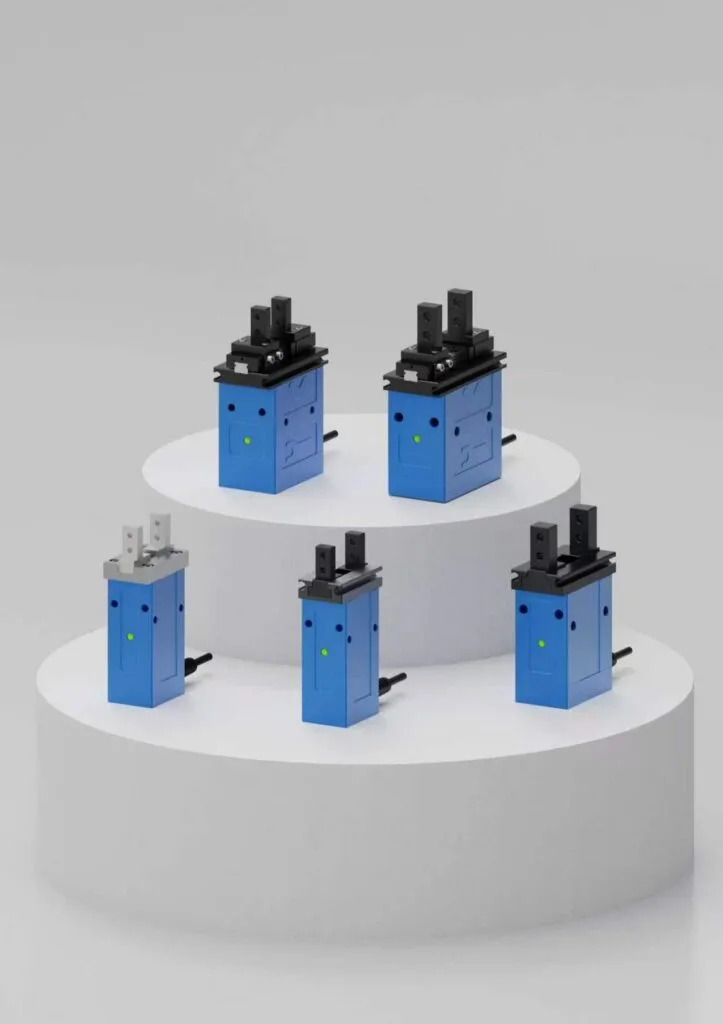
EPGL-200-1200 electric gripper and EPGS-6-10 electric gripper have different published stroke and force references. Compare current model data and request itemised quotations for the required fingers, controller, cables and documentation.
A wide stroke buys flexibility across part variants. Where the cell runs one family with a stable envelope, that flexibility is inside the electric gripper price and never used. Match the class to the largest and smallest dimension that genuinely passes between the jaws, plus finger thickness and running clearance, rather than to the widest part the cell might see next year. Most of the electric gripper cost is committed at that decision.
| Requirement raised | What it moves inside the unit | Effect on the electric gripper price |
|---|---|---|
| More force at the same travel | Larger motor, stronger transmission | Steps up |
| More travel at the same force | Longer guiding, stiffer body, longer fingers | Steps up further than force alone |
| Both raised together | Two sizing decisions plus the lever arm they create | Steps up steeply |
| Position tolerance relaxed | Simpler guiding, more clearance accepted | Steps down |
| Speed requirement lowered | Smaller drive for the same output force | Steps down modestly |
Duty cycle and what a continuous hold adds
Duty cycle is the line buyers most often leave out, and it is one reason two quotations for a similar part diverge. A pneumatic gripper holds a part with trapped air, so holding costs nothing. An electric gripper holds with current through a motor, and the longer the hold, the more heat the unit must manage, and the more the electric gripper price reflects that thermal duty.
Three patterns are priced differently. Pick-and-place with a brief grip has the easiest thermal job. Applications that keep the jaws closed for long static periods, such as a fixture held shut between cycles, need either a thermal design built for continuous holding or a self-locking mechanism that removes the standing current. Stating which pattern applies, with typical durations, tells a supplier more than any list of features, and it is a genuine part of the electric gripper price.
Drive and control integration
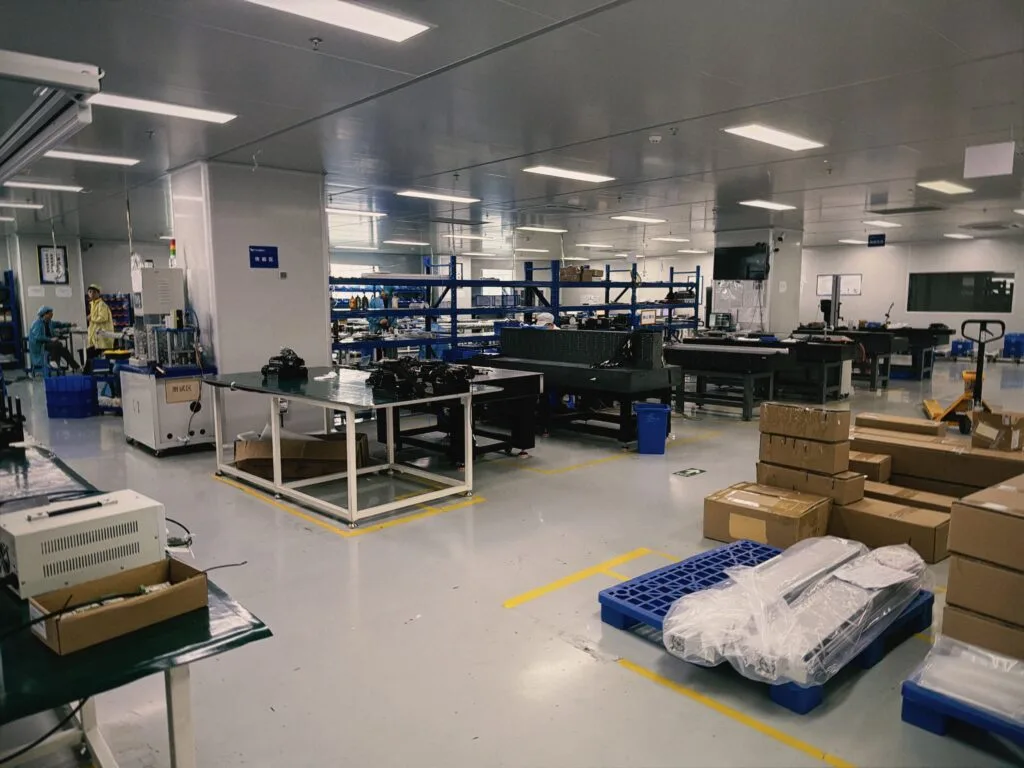
The drive and its control electronics form the second-largest block in the electric gripper price. Every unit needs a motor, drive electronics, position sensing and connectors. What differs is where that electronics sits: inside the body, in a box at the wrist, or in the cabinet.
Integration moves the electric gripper price rather than removing it. A unit with the controller built in eliminates cabinet space, a panel-mounted driver and one cable run, and simplifies what the integrator wires. In exchange the tool becomes larger and heavier, and the payload it consumes grows. The two arrangements are compared in this note on integrated versus separate controller grippers, and the same decision determines whether the electric gripper price is paid on the arm or in the panel. Communication choices follow the same logic: the protocol is not the cost, the connector, cable and configuration time around it are.
Feedback capability: where the figure steps up
Feedback is the cleanest single step in the electric gripper price. A unit that only closes on command sits at the bottom of the range. Add position feedback and the jaws can report where they actually stopped, which turns an empty grip into a detected fault rather than a mystery. Add force feedback and the controller can compare the grip achieved against the grip intended.
The step is not one sensor. It is the encoder, the current sensing in the drive, the calibration performed at build, and the electronics that publish the values to a controller. Whether the process should carry that part of the electric gripper price depends on what an undetected bad grip is worth: moving a low-value part into a fixture that catches errors needs none, while a false grip that becomes scrap two stations later justifies it easily. Feedback is often the line removed to bring the electric gripper price down, and the one that reappears as scrap in the next quarter.
Protection rating and the environment it must survive
Protection rating changes materials and sealing, and both take a share of the electric gripper price. An IP number has two parts: the first digit covers solids and dust, the second covers water. Each step upward adds gaskets, sealed cable entries and connectors, often a different finish, and sometimes different bearing lubrication. It also costs indirectly, because a sealed unit is slower to assemble and harder to inspect.
Coolant mist with swarf carried in it penetrates openings that shed plain water, and the failure it causes is gradual rather than immediate. Washdown is a different problem: a rating that survives splashing is not automatically one that survives a directed jet with detergent, and cleaning chemistry decides which seal and lubricant materials are permissible. Both errors are common. Specifying sealed protection for a dry cell pays for sealing the application never uses, while an unsealed unit in a machining cell saves money once and loses it on repeat failures.
Fingers and tooling: cost that sits beside the gripper
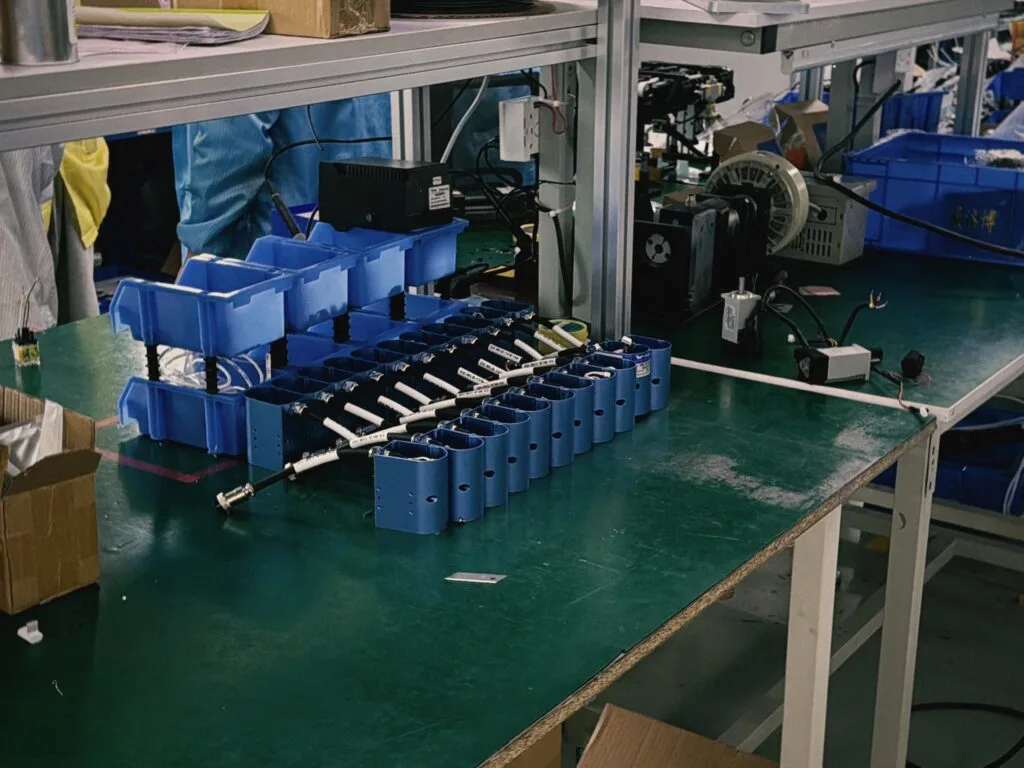
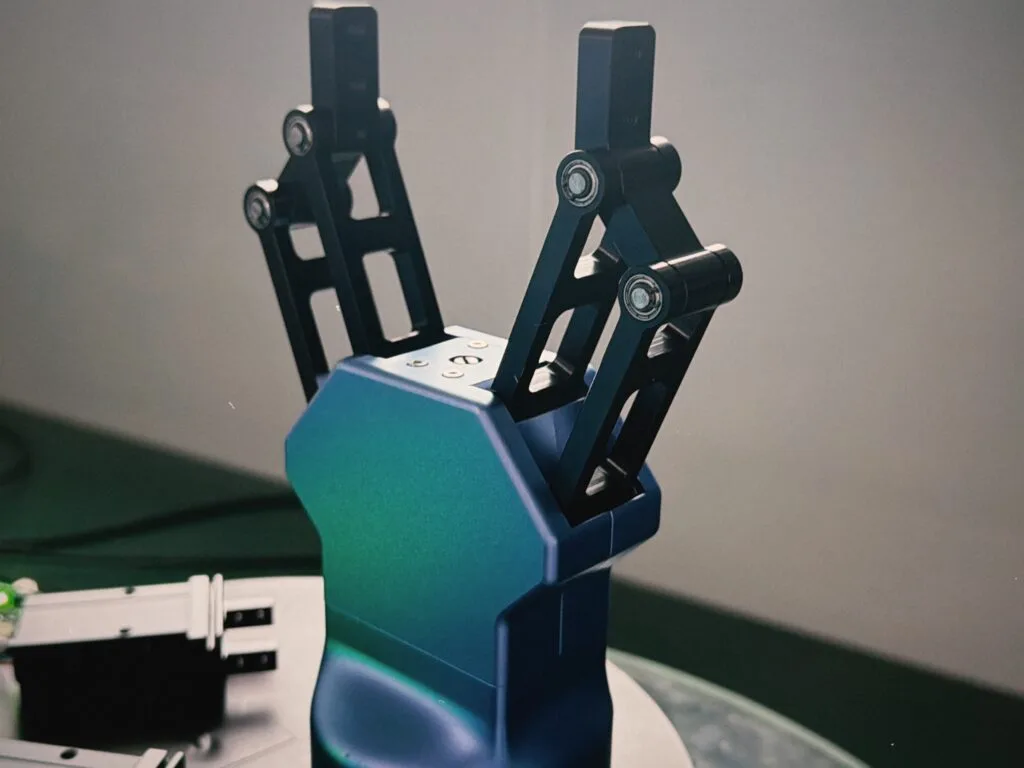
Fingers are a separate purchase in most projects and a real share of the electric gripper price as installed. A standard pair of flat jaws carries a catalogue number. A profiled set that presents a connector at a defined attitude, clears surrounding tooling and will not mark a visible surface is a design job with a drawing and usually one iteration.
Four inputs move that cost: how many part variants the jaw set must handle, how complex the profile is, which material is required, and whether the fastening needs an adapter plate. Buyers who treat fingers as free discover otherwise at order confirmation, so tooling belongs on the same comparison sheet as the gripper.
Volume, variants and customisation
Volume moves the electric gripper price in a way that is entirely structural. Every order carries a fixed part: time to configure the unit, test it against the stated requirement, document, pack and handle it. Spread across one unit that fixed part is large; spread across a batch it becomes small. This is why the electric gripper price for an evaluation unit and for the same unit inside a rollout are not the same number.
Customisation adds a second fixed part: drawings, approval steps and a sample the buyer inspects before release. Once that work is done, repeat orders avoid it. Markings, cable lengths, connector types and documentation packages sit in the same category, paid once or paid repeatedly depending on how the order is structured.
| Where the money in a quotation goes | What it covers | How it moves with volume |
|---|---|---|
| The configured unit | Motor, transmission, guides, bearings, electronics | Falls per unit as batch size rises |
| Engineering and drawings | Duty review, jaw design, approval cycle | Paid once, then negligible |
| Test and documentation | Verification against the stated duty, paperwork | Falls per unit, never to zero |
| Accessories | Cable, controller, mounting adapter | Small per unit, and the usual source of unfair comparisons |
| Spares and consumables | Replacement pads and finger sets | Follows the maintenance plan, not the order size |
How to compare two electric gripper price quotations
An electric gripper price comparison is only meaningful when both documents describe the same duty. Work through the lines below first.
| Normalise this line | Why it changes the figure | Question to send back |
|---|---|---|
| Force and stroke class | Different mechanism behind the same family name | Which duty was priced, the stated one or a default? |
| Location of the electronics | Cost moved between the tool and the cabinet | Is the controller included, and where does it mount? |
| Feedback included | Adds or removes the whole sensing chain | Does the figure include position feedback? |
| Protection rating | Seals, glands, materials and assembly time | Which IP rating was quoted, and does it match the cell? |
| Fingers and jaws | A design job presented as an accessory | Is tooling in scope, and for how many variants? |
| Cable and connectors | Frequently quoted separately and omitted from memory | What length and which connector type are included? |
| Delivery basis and support | Terms change the comparable figure directly | Same trade term and the same support commitment? |
| Spares | The cost after the first failure, not the first purchase | Are pads and finger sets orderable separately? |
Filled in for both documents, that table converts most of the electric gripper price difference into a list of scope differences.
Costs that sit outside the electric gripper price
The unit is one line in the installed electric gripper cost, and the lines around it can outweigh the difference between two suppliers even when their electric gripper price is identical. None of them appear on the quotation, which is why they get forgotten.
- Integration engineering. Someone writes the gripper into the program, teaches positions and verifies the grip. A documented interface removes hours; a thin one adds them.
- Mounting adapters. A bolt pattern that does not match the wrist or the existing adapter means a machined plate, a new cable path and a re-teach of the tool frame.
- Cable routing. The cost of a badly routed cable is not the cable. It is the intermittent fault it causes months later, and the time lost finding it.
- Commissioning downtime. The station stops while the tool is fitted and proven, and units needing different setup depth impose different downtime.
- Scrap from undetected bad grips. Leaving feedback out does not remove the cost of a bad grip; it moves the cost downstream of the tool.
Where over-specification inflates the electric gripper price
Over-specifying is the most common route to a higher electric gripper price with nothing gained. It begins with a specification written for the worst case the author can imagine rather than the duty the cell has. Three habits consume gripper budget fastest: sizing for a part that may arrive next year instead of the parts the cell runs now, choosing the highest protection rating available to be safe, and adding feedback and fieldbus options because they exist.
Each choice is defensible alone. Together they move the unit one or two classes upward and add weight on the wrist, which asks the robot for more payload and can disturb the station design. The consequence extends past the tool: a heavier gripper changes the acceleration available, and that changes cycle time, which is the number the project was justified on. A margin chosen on purpose can be defended; a margin chosen from anxiety is paid on every unit in the rollout.
Where under-specification costs more than the difference
The opposite error costs more than the electric gripper price difference, because it converts a one-off saving into a recurring loss. A force margin sized to the nominal part rather than the heaviest in the batch produces intermittent failures, and protection chosen for a clean bench fails once the cell runs coolant. No feedback means a bad grip is found at the destination instead of the source. None of these announce themselves on the first day; they appear when the line runs at rate.
There is also a class question underneath. If the requirement is holding pressure for long periods with little variation, the electric option may not be the right answer at any price, which is the trade set out in this comparison of electric and pneumatic grippers. Paying more for the wrong class is worse than paying less for the right one.
| Specification habit | What it looks like on the quotation | What it costs afterwards |
|---|---|---|
| Over-specifying force and stroke | One or two classes larger than the duty needs | Payload, weight and frame changes on the robot |
| Over-specifying protection | Highest rating regardless of the cell | Paid for sealing the application never uses |
| Under-specifying force margin | Sized on the nominal part alone | Intermittent drops once batches vary |
| Under-specifying protection | Unsealed unit in a wet or dusty cell | Repeated seal and bearing failures |
| Omitting feedback | No way to confirm a grip exists | Bad grips found at the destination, not the source |
| Treating fingers as an afterthought | Tooling left out of the first enquiry | A late design change after the order is placed |
What to put in an enquiry so the figures are comparable
A quotation is only as comparable as the request behind it. The list below is the minimum that lets a supplier price the right class instead of guessing at a default.
- The part. Material, mass, which faces the jaws touch, whether the finish is visible. A photograph and a sketch beat a paragraph.
- The force the contact must carry. Say whether that figure is calculated or assumed from a similar station.
- The travel needed. The largest and smallest dimension passing between the jaws, plus finger thickness and clearance.
- The cycle. Grip duration, cycles per shift, and whether the hold is brief or long.
- The environment. Coolant, chips, dust, washdown, ambient temperature, and where the unit sits.
- The feedback the process needs. What the controller reads back and what it does with the value.
- Robot and mounting. Flange pattern, adapter already in use, payload remaining for the tool.
- Communication. Which interface the controller offers, so the right variant is quoted first time.
- Fingers. Whether tooling is in scope, and how many part variants it must cover.
- Volume and timing. First quantity, expected repeat rate, and when the line needs the unit in place.
Sent together, these ten inputs produce an electric gripper price that can be compared line by line against another supplier’s and against the station’s own installed cost.
Frequently asked questions
Why are two electric gripper price quotations so far apart for the same part?
Almost always because the two documents built the electric gripper price from different duties. One may include position feedback, a higher protection rating, a wider stroke class or the finger tooling, and the other may not. Normalise force and stroke class, electronics location, feedback, protection, tooling and delivery terms line by line, and the remaining difference is usually small enough to explain.
Does a higher electric gripper price mean a better gripper?
No. It means a larger class or more configuration, which is the short answer to why are electric grippers expensive. Beyond the point where the duty is covered, extra force, travel or feedback adds cost and weight without improving the outcome. The test is whether every increment corresponds to something the process needs.
How much of the figure is the fingers rather than the gripper?
Enough that it should never be left out of the comparison. Standard flat jaws are a catalogue item, but a profiled set that presents the part at a defined attitude, clears nearby tooling and protects a visible surface is a design task with drawings and usually one iteration.
Can ordering more units reduce the electric gripper price?
It reduces the fixed part of it: configuration, drawings, approval, testing and documentation spread across more units. State the first quantity and the expected repeat rate in the same enquiry.
Is force feedback worth what it adds to the price?
It depends on what an undetected bad grip costs, which is the only honest way to judge that electric gripper price step. Where a failed grip becomes scrap, a rework cycle or a missing traceability record, the sensing chain is normally justified. Where the part is low in value and the fixture catches errors, it adds cost without changing the result.
Need help selecting a gripper?
Send your part drawing, robot model, required stroke, clamping force, country, and quantity for a practical model shortlist.